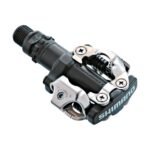
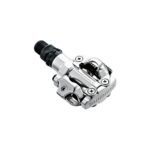
Description
Shimano PD-M520 SPD XC Pedals – The Clipless Classic That Never Gets Old
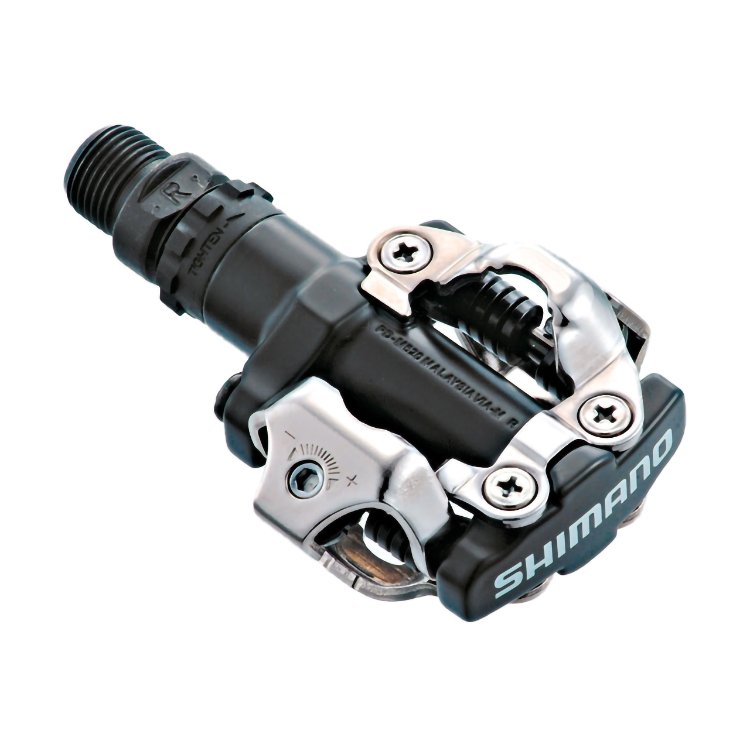
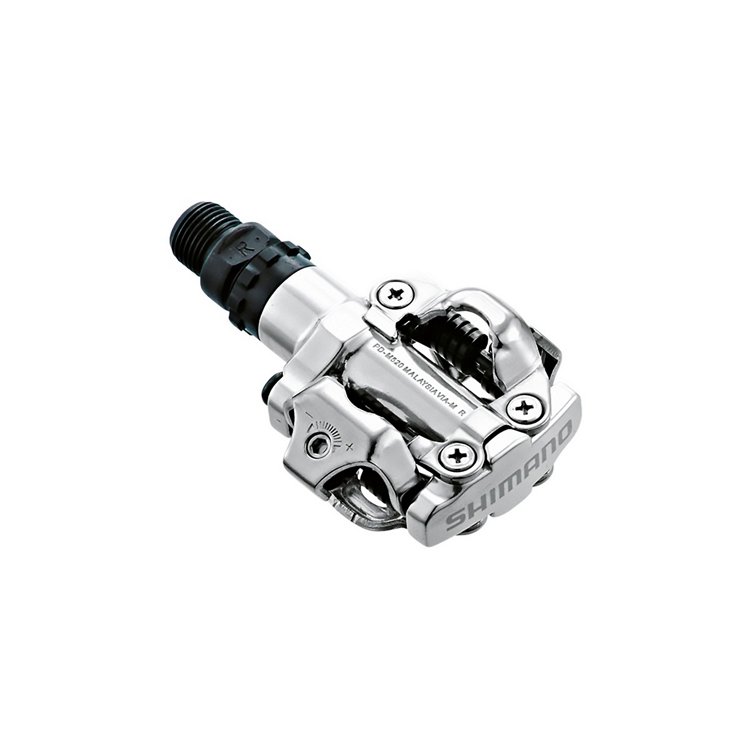
Some products become iconic for a reason. The Shimano PD-M520 has been the go-to entry point for clipless SPD pedals for over two decades, and it remains one of the most-reviewed, most-recommended, and most-ridden pedals in the world. If you’re looking for your first clipless pedals, or simply want a bombproof set of spares that you don’t have to worry about, the M520 is the answer.
The Same SPD Mechanism, a Fraction of the Price
The secret to the M520’s enduring popularity is simple: it uses the same core Shimano SPD clipping mechanism as the far more expensive Deore XT and XTR pedals above it in the range. The fluorine-coated binding claws engage and release with that satisfying, defined click that SPD pedals are known for, and the adjustable release tension means you can dial in exactly how securely you want to be held in — whether you’re a nervous beginner who wants to get out quickly, or a seasoned trail rider who wants a more locked-in feel.
Dual-Sided Entry — No Faff, No Fuss
Unlike single-sided pedals that require you to flip the pedal to the correct orientation before clipping in, the M520’s dual-sided design means you can just stamp your foot down and it clips in — simple as that. The open binding mechanism allows mud and debris to be pushed out when you step into the pedal Shimano, making it reliable even in messy conditions. It’s one of the reasons the M520 works just as well for a muddy cross-country ride as it does for a dry commute.
Built to Last, Easy to Live With
The M520 features a chrome-moly steel spindle and low-maintenance sealed bearing cartridge axle that will keep rolling smoothly with minimal upkeep. The pedals can be fitted with either a 6mm hex key or a traditional 15mm pedal spanner — useful if you like to carry tools for trail-side adjustments. The open, compact body design keeps weight reasonable and helps prevent mud from packing in and jamming the mechanism.
The M520 uses the exact same mechanism to control entry and release as its more expensive Shimano XT and XTR brethren, with only materials adjusted to meet the price point. For the vast majority of riders, the real-world performance difference is undetectable.