Description
Topeak PocketShock DXG – Award-Winning Precision Shock Pump with Pressure-Rite Connector
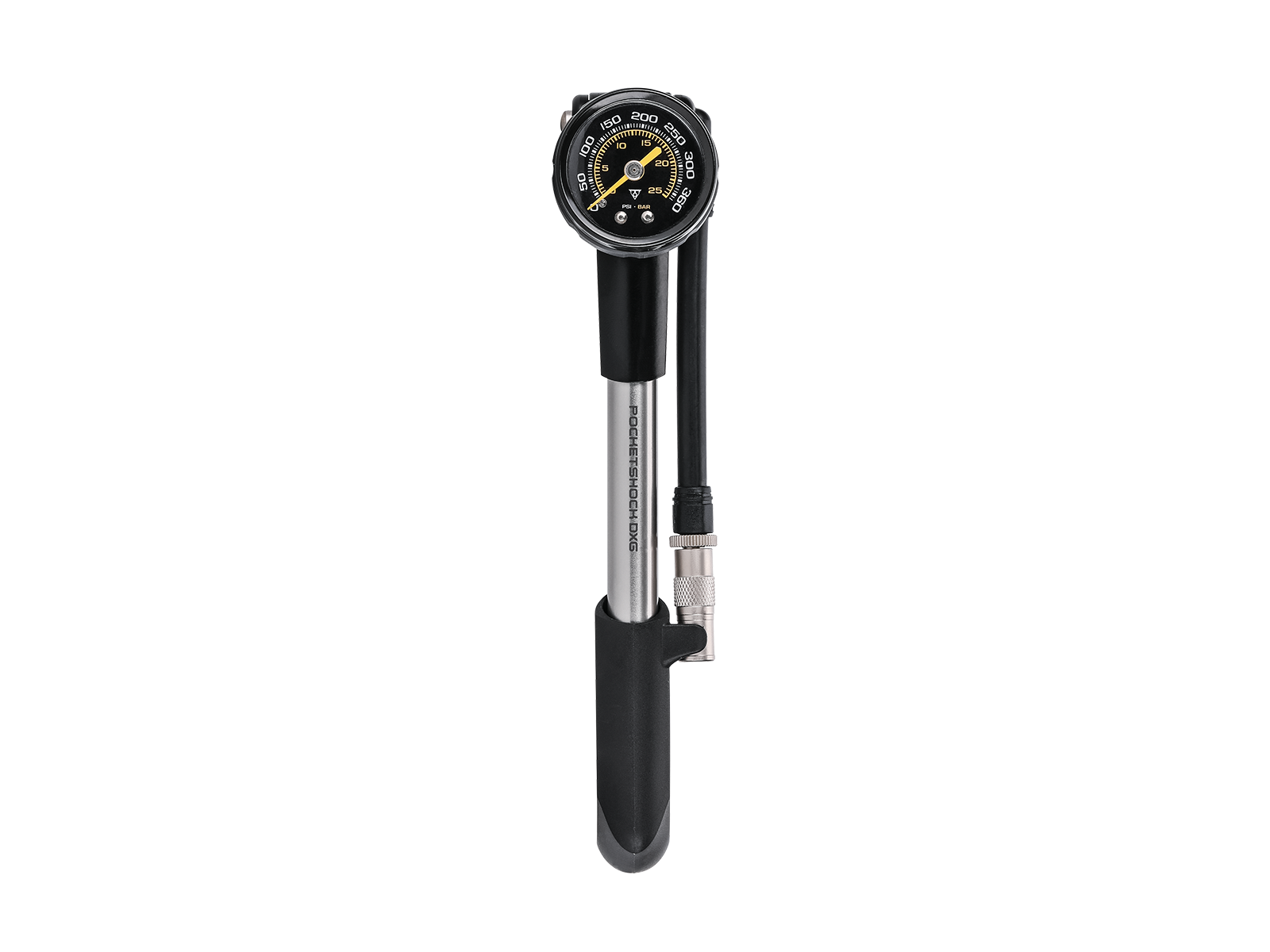
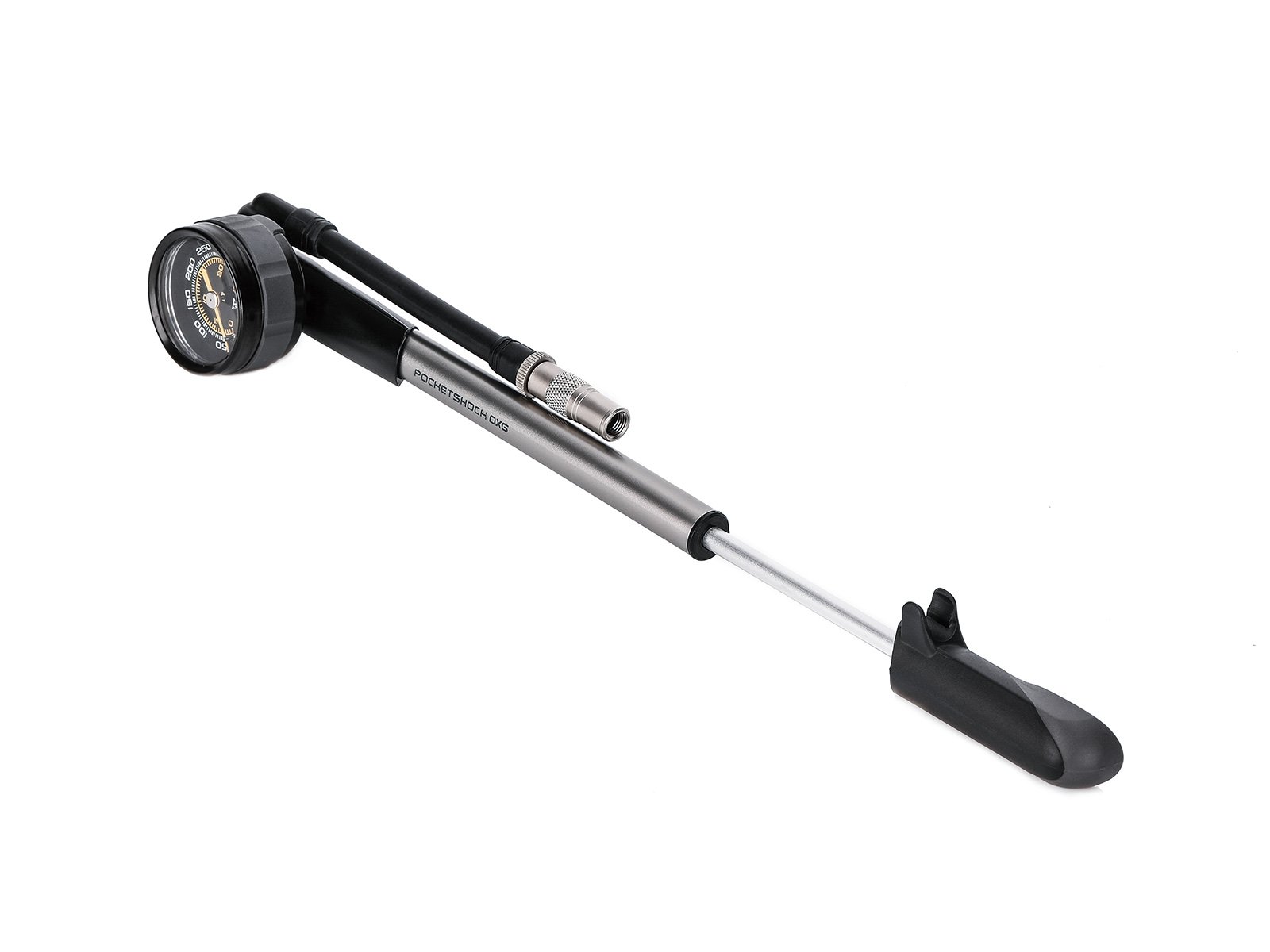
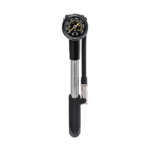
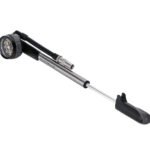
Achieve perfect suspension setup with the award-winning Topeak PocketShock DXG, a precision shock pump featuring an easy-to-read analogue dial gauge, innovative Pressure-Rite connector that eliminates air loss during disconnection, air release button for fine-tuning, and flexible rotating hose that reduces valve stem stress. This professional-grade shock pump delivers accurate pressure readings up to 360 PSI (24.8 BAR) with exceptional precision essential for optimising modern mountain bike suspension systems. The extended aluminium barrel provides 11cc volume per stroke for efficient inflation, whilst the dual-density polymer handle ensures comfortable operation during extended setup sessions. At 170g and measuring 21.5 x 4.5 x 4.3cm, the PocketShock DXG combines workshop-quality precision with portable dimensions perfect for home workshop suspension tuning, race-day setup adjustments, or bikepacking adventures where precise suspension performance directly impacts ride quality and control.
Pressure-Rite Connector Technology – Zero Air Loss Guaranteed
The revolutionary Pressure-Rite connector represents the PocketShock DXG’s defining innovation, solving suspension pumping’s most frustrating challenge: air loss during pump disconnection. This patented valve connection system maintains complete air seal throughout the disconnection process, ensuring the pressure you set is the pressure that remains in your fork or shock.
The Air Loss Problem:
Traditional shock pump connections lose 2-5 PSI during disconnection as air escapes from the hose volume when separating from the valve. This seemingly minor loss creates significant problems:
Fork Pressure Impact: Modern air forks typically run 60-100 PSI. Losing 3-5 PSI represents a 3-8% pressure change—enough to noticeably alter fork performance. What felt perfect during testing becomes too soft after disconnection, forcing riders into frustrating pump-test-adjust-repeat cycles.
Shock Pressure Impact: Rear shocks often require 150-250 PSI. Even 2-3 PSI loss affects damping characteristics and sag measurements. Achieving precise 25-30% sag becomes difficult when disconnection removes unpredictable pressure amounts.
Fine-Tuning Frustration: Precision suspension setup requires 1-2 PSI adjustments. Traditional pumps losing 3-5 PSI make fine-tuning impossible—you cannot accurately set pressures when disconnection removes more air than your intended adjustment.
The Pressure-Rite Solution:
The Pressure-Rite connector uses a sophisticated valve mechanism that isolates the hose volume from the shock valve before disconnection. When you unscrew the pump, the Pressure-Rite system closes an internal valve that separates the hose air chamber from the shock valve, preventing any air escape from the suspension unit. Only the insignificant hose volume releases—the shock itself remains perfectly sealed.
Easy-to-Read Analogue Dial Gauge – 360 PSI Maximum Capacity
The large-diameter analogue dial gauge provides clear, precise pressure readings up to 360 PSI (24.8 BAR) with exceptional visibility and accuracy essential for professional suspension tuning.
Gauge Design Advantages:
Large Dial Face: The generous gauge diameter ensures numbers and increment markings remain clearly legible even in challenging conditions—poor lighting, dirty hands, awkward mounting positions, or aging eyes. The large face eliminates squinting and guesswork, providing confident readings during every setup session.
Clear Increment Markings: Precise increment markings enable accurate readings in 1-2 PSI increments throughout the pressure range. This granularity proves essential for fine-tuning suspension where small pressure changes create noticeable performance differences.
360 PSI Capacity: The 360 PSI maximum accommodates virtually all modern air suspension systems:
Air Forks: Typically 50-120 PSI depending on rider weight and fork model
Rear Shocks: Usually 100-300 PSI depending on shock design and rider weight
High-Pressure Systems: Some shocks require 250-350 PSI for heavier riders
Future-Proof: Capacity exceeds current requirements, accommodating future suspension designs
Analogue vs Digital Reliability: Analogue gauges offer distinct advantages for suspension pumping: no batteries to fail, operation in all temperatures, immunity to electronic malfunction, instant readings without power-on delays, and lifetime reliability without electronic component aging. For critical suspension setup where gauge failure mid-session wastes valuable setup time, analogue reliability proves invaluable.
Pressure Reading Accuracy: The dial gauge maintains professional-grade accuracy throughout its pressure range, ensuring displayed readings accurately reflect actual suspension pressures. This precision enables confident suspension setup knowing your measurements match reality.
Air Release Button – Precise Pressure Fine-Tuning
The integrated air release button enables controlled pressure reduction for achieving perfect suspension setup through incremental fine-tuning.
Air Release Button Advantages:
No Disconnection Required: Traditional setups require disconnecting the pump to reduce pressure, causing significant air loss and making downward adjustments frustrating. The air release button enables pressure reduction whilst maintaining the Pressure-Rite seal, preventing uncontrolled air escape.
Controlled Adjustment: Brief button presses release small air amounts for precise control. You can reduce pressure by exact 1-2 PSI increments rather than guessing at pump removal timing.
Iterative Tuning: The combination of air release button and Pressure-Rite connector enables true iterative tuning: pump, test, adjust down if needed, test again, adjust further if needed—all whilst maintaining accurate pressure control.
Professional Setup Capability: This precision matches professional workshop equipment, enabling home mechanics to achieve identical setup quality to specialist suspension tuning centres.
Flexible Rotating Hose – Valve Stem Protection
The flexible rotating hose addresses a critical but often overlooked suspension pumping challenge: valve stem stress and potential damage during inflation.
Valve Stem Stress Problem:
Suspension air valves extend perpendicularly from fork crowns or shock bodies, creating awkward pumping angles. Rigid pump connections force riders to either hold the bike unnaturally or bend the pump at the connection, applying lateral stress to the delicate valve stem. This stress can:
Damage internal valve mechanisms
Crack valve threads over time
Cause slow air leaks from stressed seals
Lead to expensive shock service or replacement
Create setup frustration from pressure loss
Flexible Hose Solution:
The PocketShock DXG’s flexible rotating hose absorbs angular misalignment, maintaining a comfortable straight-line pumping stroke regardless of valve orientation. The hose bends naturally to accommodate the valve position, whilst the rotating swivel fitting allows the pump handle to align comfortably with your pumping motion.
Practical Benefits:
Protects expensive suspension components from stress damage
Comfortable pumping position regardless of valve location
Natural straight-line stroke without awkward wrist angles
Long-term valve reliability through stress elimination
Professional setup without risk of component damage
Confidence in safe, protective suspension servicing
Whether you’re inflating an upside-down fork in a bike stand, pumping a shock whilst the bike stands upright, or servicing suspension in cramped workshop conditions, the flexible hose ensures comfortable, safe pumping that protects your valuable suspension investment.
Extended Aluminium Barrel – Efficient High-Volume Inflation
The extended barrel design provides 11cc volume per stroke, optimising the balance between compact portability and efficient high-pressure inflation.
Volume per Stroke Significance:
11cc Capacity: This volume represents careful engineering optimisation. Larger barrels (15-20cc) inflate faster but require significantly greater physical effort per stroke at high pressures. Smaller barrels (5-8cc) require less effort but demand excessive stroke counts for initial inflation. The PocketShock DXG’s 11cc volume provides the ideal compromise: reasonable effort per stroke whilst maintaining efficient inflation speed.
Aluminium Barrel Construction:
Lightweight aluminium construction provides the smooth, precise bore essential for accurate high-pressure pumping whilst minimising weight. The aluminium barrel withstands years of high-pressure cycles without deformation or wear, maintaining consistent performance throughout the pump’s lifetime.
Dual-Density Polymer Handle – Comfortable Operation
The ergonomically designed dual-density polymer handle ensures comfortable operation during extended setup sessions involving multiple suspension adjustments.
Dual-Density Design:
Firm Core: The handle’s rigid inner core provides structural support for transmitting pumping force efficiently to the barrel piston, preventing flex or deformation during high-pressure strokes.
Soft Outer Layer: The compliant outer grip material creates comfortable hand contact, reducing pressure points and preventing discomfort during the 50-100+ strokes often required for complete suspension setup.
Extended Session Comfort:
Setting up complete suspension systems (fork and shock) or testing multiple pressure settings requires significant pumping—easily 100-200 total strokes during comprehensive setup sessions. The dual-density handle prevents hand fatigue and discomfort that would occur with hard plastic or bare aluminium grips, enabling comfortable, controlled pumping throughout the entire session.